




Your sales team has heard it all. "Game-changing," "revolutionary," "next-gen"—the buzzwords fly fast. But now, the AI sales agent has truly entered the chat... and it's picking up the phone.
We're not talking about those clunky, robotic chatbots from a few years ago that would short-circuit if a prospect asked a question slightly off-script. In 2026, we're talking about sophisticated tools that can autonomously run discovery calls, nurture leads 24/7, and update the CRM without complaining.
The potential is staggering: cloning your 'A' player, automating the grind, and letting your human reps focus on what they do best—closing complex, high-value deals.
But here's the catch. With every vendor promising a digital Don Draper, the market is suddenly deafening. How do you separate the genuine sales champion from the glorified, very expensive answering machine?
Let's help you out in this guide.
What Is an AI Sales Agent?

An AI sales agent is an autonomous or semi-autonomous system that uses artificial intelligence to engage prospects, qualify leads, answer questions, book meetings, and support sales teams across multiple channels, including voice, email, chat, and platforms like Slack.
Modern tools go far beyond basic chatbots. A sales AI agent can interpret intent, personalize responses, access CRM data, trigger workflows, and scale tasks that previously depended entirely on human bandwidth.
Businesses use this sales AI agent to scale their outreach, ensure instant lead follow-up, and automate the manual grind, freeing up human reps to focus on high-value conversations and closing deals.
Why Businesses Are Adopting AI Agents for Sales Enablement
Adoption is a direct response to a massive pain point. Salespeople are notoriously buried in work about work, including data entry, prospecting, and sending a million follow-ups.
Businesses are turning to an AI agent for sales because it fundamentally shifts this dynamic. It's the ultimate sales enablement tool. Instead of just assisting a rep, the agent is the rep for the most repetitive, top-of-funnel tasks.
The "why" is simple:
- It clones your 'A' player: It takes the persistence and script of your best SDR and applies it 24/7.
- It solves the speed-to-lead crisis: It can engage a new lead in seconds, not hours, which is the single biggest predictor of conversion.
- It frees human capital: It lets your expensive, highly-trained human reps do what only humans can do: build complex relationships, navigate company politics, and close big deals.
The Evolution of AI in Sales
It's important to know we've come a long way.
- Phase 1 (The 2010s): "Dumb" Automation. This was basic email sequencing and clunky, rules-based website chatbots. If you went off-script, they broke ("I'm sorry, I don't understand that.").
- Phase 2 (The early 2020s): "Assistive" AI. This is AI that helps humans. Think of call-coaching tools that provide real-time suggestions or CRM "smart" features that suggest the best time to send an email. Helpful, but the human still does all the work.
- Phase 3 (Today): "Autonomous" AI. This is the AI sales agent. Powered by generative AI and conversational Large Language Models (LLMs), these agents don't just follow a script. They understand intent, manage multi-turn conversations, overcome objections, and act autonomously to achieve a goal (e.g., "book a meeting").
What an AI Sales Agent Does
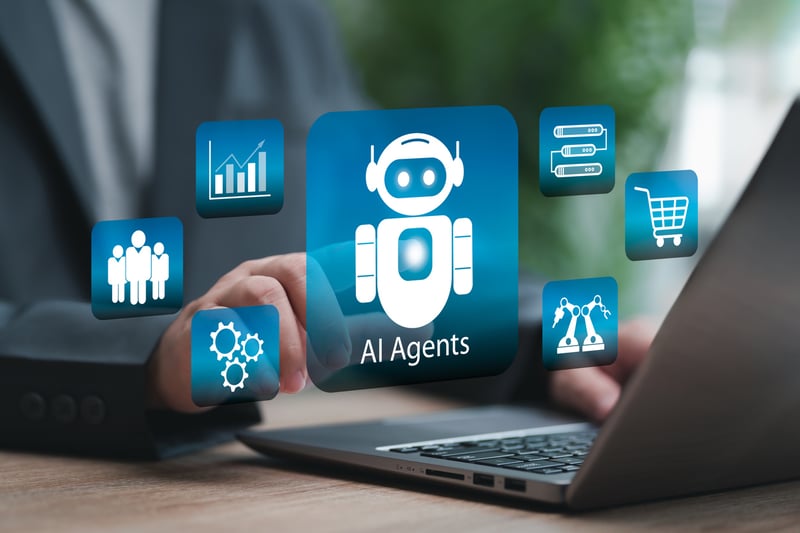
So, what's on this digital rep's daily to-do list? Unlike a simple automation tool (like a "bot"), a true sales agent AI operates with intent. Its job isn't to send 500 emails; its job is to get 5 qualified meetings, and it will use a dynamic mix of tasks to get there.
Core Capabilities of a Modern Sales AI Agent
A strong AI sales agent software typically includes:
- Autonomous Outreach & Prospecting: An outbound AI sales agent can kickstart the entire sales cycle. It can identify ideal customer profiles, find their contact data, and then initiate personalized conversations via email, SMS, or even a voice AI sales agent call.
- Natural Conversation (Voice & Text): The best AI sales voice agent has natural pacing, understands different accents, can be "interrupted," and responds to complex questions fluidly.
- 24/7 Lead Response & Qualification: The agent monitors all inbound channels (like your website form). When a lead comes in at 2 AM on a Sunday, the AI engages them in seconds via chat or email.
- Automated Scheduling: Once a lead is qualified, the agent's job is to book the meeting. It syncs directly with your team's calendars ("Does Tuesday at 3 PM work?"), finds a time and sends the calendar invite.
- Perfect CRM Data Entry: The agent automatically logs every single touchpoint, call summary, and outcome in your CRM (like Salesforce or HubSpot). No more "forgot to log it" from your reps.
The Technology Behind AI Sales Agent
Behind every effective AI agent for sales is a blend of technologies working together:
- Conversational AI: This is the engine. It's a combination of Natural Language Processing (NLP) to understand what a human is saying or typing, Large Language Models (LLMs), to generate human-like, context-aware responses, and Speech-to-Text & Text-to-Speech (STT/TTS), for the AI voice sales agent to listen and speak.
- Generative AI: This is what allows the agent to be creative. It doesn't just pull from a pre-written script. It can generate a brand-new, personalized email on the fly to overcome a specific objection it has never heard before.
- Deep AI Integration: This is what makes the agent a team member and not just a tool. An agent's effectiveness is defined by its integrations. It must connect seamlessly to:
- CRMs (Salesforce, HubSpot): To pull lead context and log activity.
- Calendars (Google, Outlook): For scheduling.
- Communication Channels (Email, VoIP, SMS): To actually talk to the world.
- Internal Knowledge: This is key. The agent must be trained on your company's product docs, case studies, and sales playbooks.
- Internal Comms (like Slack): The top AI Slack agent for sales can live right inside your company's chat.
This same tech is revolutionizing AI in e-commerce, where agents act as 24/7 personal shoppers, guiding users to the right product, answering pre-purchase questions, and saving abandoned carts in real-time.
Types of AI Sales Agents

In sales, the tools generally fall into two distinct camps: agents that do the work for you (Autonomous) and agents that help you do the work better (Assistive).
Autonomous AI Sales Agents
These are the proactive "digital reps" on your team. You give them a goal (e.g., "book 10 qualified meetings"), and they execute the entire workflow, from finding a lead to putting a meeting on your calendar, with no human intervention required.
|
Capability |
How It Works (The "Doing") |
|
Lead Generation & Qualification |
The AI agent for sales sifts through your inbound leads or hunts for new ones based on your Ideal Customer Profile (ICP). It then engages them in a natural, two-way conversation via email or chat, asking qualifying questions (think BANT) just like an SDR would. |
|
Outreach & Follow-ups |
A sales AI agent can send outbound messages, conduct AI sales calls, handle objections, and follow up automatically based on behaviour. Zero dropped threads, zero ghosted leads, zero “my bad, I forgot to reply.” |
|
Website Conversational Agents |
These agents engage visitors the moment they land on your site. They can answer product questions, recommend items (especially for e-commerce), and escalate high-intent users. Modern AI agents for sales don't sound like rigid chat scripts—they behave more like trained reps. |
|
Meeting Scheduling |
A top AI sales agent can check calendar availability, negotiate times with prospects, and book meetings automatically. This removes the endless back-and-forth that drags deals out for days. |
Assistive AI Sales Agents
These are the "co-pilots" that sit on your reps' shoulders. They don't talk to the customer for you, but they make damn sure you're at your best when you do. They are powerful sales enablement tools that augment your human team.
|
Capability |
How It Works (The "Helping") |
|
Conversation Intelligence & Coaching |
These agents analyze calls, emails, and chats to highlight winning behaviours. They can spot patterns, create coaching insights, and even measure talk ratios. Teams using AI-assisted intelligence see double-digit improvements in rep performance. |
|
CRM Updates & Data Management |
A sales agent AI can update fields, log notes, sync deal stages, and enrich data automatically. Clean CRM data = smarter decisions + more accurate forecasting. |
|
Content Generation & Customization |
Need a product-specific outreach message? A follow-up after a demo? A personalized video script? An assistive AI agent for sales enablement creates content that reps can ship instantly. This overlaps heavily with AI marketing tools, but is tailored specifically for revenue workflows. |
|
Deal Support & Forecasting |
These agents can analyze pipeline health, identify risk signals, and predict deal outcomes. They essentially function as a mini–chief of staff for reps and managers. |
Benefits of Using an AI Sales Agent

Integrating a leading AI agent for sales isn't just about sounding futuristic. It's about solving tangible, expensive problems.
Productivity and Efficiency Gains
The biggest perk of adopting the best AI sales agent software is reclaiming time. Reps spend up to 65% of their day on non-selling tasks, including research, CRM updates, follow-ups, coordination, and busywork. AI takes all of that off their plate.
Whether it's an autonomous AI agent running outbound campaigns or an assistive agent cleaning up notes, the end result is the same: more selling hours, more pipeline, and fewer “sorry, I didn't get to that” moments.
Data-Driven Selling and Insights
A modern AI agent with sales knowledge can analyze thousands of conversations, behaviours, and deal patterns in seconds. This means your sales decisions are based on real buyer signals, not gut feelings.
AI-backed insights help:
- Predict which leads are most likely to convert
- Surface hidden objections
- Spot opportunities faster
- Improve forecasting accuracy
And because these agents integrate with CRMs, marketing tools, and even e-commerce platforms, you get a unified view of the entire buyer journey.
Sales Enablement and Team Collaboration
An AI agent with sales knowledge is the ultimate enablement tool. It's like cloning your best rep and having them train everyone else, all the time.
- For New Hires: It can onboard them with real examples of "what good looks like."
- For Tenured Reps: It provides real-time coaching and surfaces the exact case study or one-pager they need during a call.
- For Managers: It gives them a "manager's-eye-view" of every deal, so 1:1s are about high-level strategy, not "Did you update the CRM?"
Enhanced Customer Experience
In 2026, speed wins. Buyers expect instant, personalized, and relevant answers. An AI sales agent makes that the new standard.
- Instant Response: A lead from your website gets a personalized email or text in seconds, not hours.
- Hyper-Personalization: The AI tailors its outreach based on the lead's industry, job title, and past interactions.
- No "Black Holes": A prospect never gets "lost." The AI ensures every single lead is engaged and nurtured until they are either qualified or disqualified.
Top AI Sales Agent Software & Solutions for 2026
Let's cut to the chase. When you search for "AI sales agent," you're not looking for theory—you want to know your options and which one to pick.
The good news? The market has matured. You've got proven platforms you can buy today, and if you want more control, you can build custom agents that do exactly what you need.
The not-so-good news? Every vendor claims they're "revolutionary," pricing is all over the map, and it's hard to tell the difference between a genuine sales AI and an overhyped chatbot.
So let's break down your actual options.
Your Two Paths: Buy Ready-Made or Build Custom
Before we dive into specific tools, here's the decision you're actually making:
Path 1: Buy a SaaS Platform Think of these like hiring a digital sales rep. Platforms like 11x.ai or Artisan give you an AI agent out of the box—you pay monthly, they handle everything, and you're up and running in days.
Path 2: Build a Custom Agent This is like building your own sales team exactly how you want it. Using platforms like n8n, you create AI agents that match your specific process, integrate with your unique systems, and cost way less at scale. The tradeoff? You need technical expertise (either in-house or from a partner like us).
Most people start with option 1 to test the waters. Smart companies eventually move to option 2 when they realize they're paying $60K+/year for something they could own for $25K.
Let's look at both.
The Big Players: Ready-to-Use AI Sales Agent Platforms
These are the platforms everyone's talking about. They work, they're fast to deploy, but they're not cheap and you're limited to what they offer.
1. 11x.ai (Alice) - The Autonomous Powerhouse
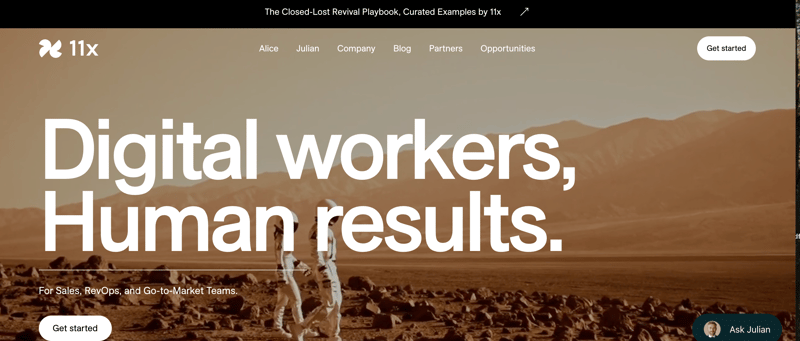
What it is: Alice is basically a digital SDR that runs your entire outbound operation. She finds leads, researches them, writes personalized emails, and manages follow-ups. You give her your ideal customer profile and value proposition, and she goes to work.
The appeal: It's shockingly fast to deploy. You can literally have Alice running campaigns within a day or two. No technical setup, no workflow design—just point and shoot.
The catch: You're paying around $5,000/month (often more for higher volumes), and it's a complete black box. If Alice sends a weird email or chases the wrong leads, you can't see why or fix the underlying logic. You're also locked into their infrastructure and pricing.
Best for: Companies that need immediate results, have budget to burn, and run standard B2B outbound processes that don't require customization.
Reality check: User reviews mention frustrations with generic messaging and restrictive contracts. It works, but it's expensive and not always as "smart" as the marketing suggests.
2. Artisan (Ava) - The All-in-One Approach
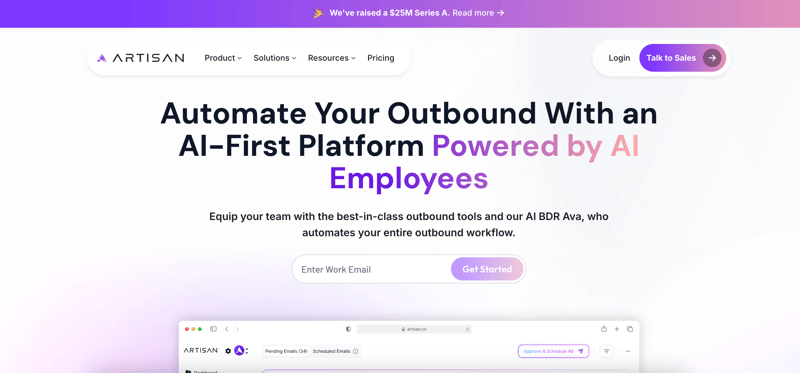
What it is: Artisan tries to be your entire sales stack—data enrichment, email warming, sending, and AI-powered personalization all in one platform.
The appeal: One login, one bill, everything in one place. For teams drowning in sales tools, that's attractive.
The catch: It's the classic "jack of all trades, master of none" problem. The data quality often doesn't match specialized providers like Apollo. The AI personalization gets described as "template-heavy" or "robotic" more often than you'd like to see. And you're paying premium pricing ($750-$1,500+/month) for bundled features you might not all need.
Best for: Small teams (5-10 people) who want simplicity over best-in-class for each function.
Reality check: High churn rates. Teams sign up excited about the consolidation, then leave when results don't justify the cost.
3. Clay - The Intelligence Layer
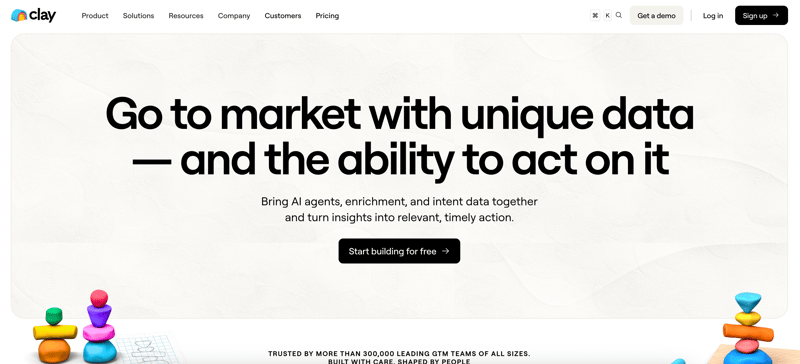
What it is: Clay isn't a full AI sales agent—it's the data and personalization engine that powers one. It pulls data from 50+ sources (LinkedIn, news, company websites, funding databases) and uses AI to find unique angles for each prospect.
The appeal: This is how you get genuinely personalized outreach at scale. Instead of "Hi , I see you work at ," you get "Hey Sarah, saw CloudTech just raised Series B with a focus on European expansion—our enterprise security module was built for exactly that scale..."
The catch: Clay doesn't send emails or make calls. You still need to connect it to your engagement platform (Instantly, SmartLead, HubSpot, etc.). So it's an add-on cost, not a replacement.
Pricing: Starts at $149/month for small teams.
Best for: Teams who already have their sales engagement platform figured out but need better data and smarter personalization to stand out.
Reality check: This is often the best value in the stack. Even if you go custom later, Clay might stay because the data quality is excellent.
4. SalesCloser AI - The Voice Agent
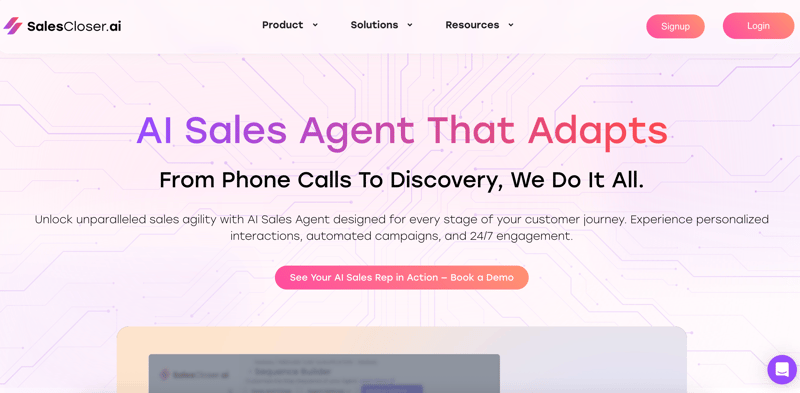
What it is: While everyone else focuses on email, SalesCloser AI handles phone and video calls. It can run discovery calls, product demos, and objection handling with prospects over actual voice conversations.
The appeal: If your sales process requires a conversation (not just an email), this is one of the few options that actually works. The voice quality has gotten shockingly good.
The catch: You're still in early adopter territory here. Voice AI is harder to get right than text, and you need to be comfortable with prospects knowing they're talking to AI (transparency matters). Also, expect enterprise pricing—typically $2,000+/month.
Best for: Companies selling products in the $5K-$50K range where qualification calls are necessary but time-consuming. Insurance, financial services, and B2B SaaS are seeing the most success.
Reality check: The tech works, but buyer psychology around "talking to a robot" is still evolving. Test it on low-stakes calls first.
5. Apollo.io with AI Features
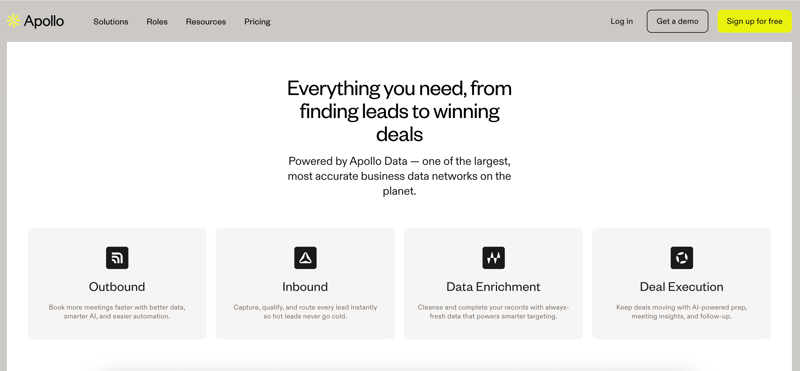
What it is: Apollo is the OG sales intelligence and engagement platform. They've bolted on AI features—email personalization, send-time optimization, lead scoring—but it's more "AI-assisted" than "AI-autonomous."
The appeal: It's battle-tested infrastructure (210M+ contacts, proven deliverability) with AI enhancements rather than an AI experiment with sales features tacked on.
Pricing: Starts at $49/user/month. AI features are on higher tiers but still reasonable compared to pure-play AI platforms.
Best for: Teams who want AI help but aren't ready to hand over the keys. You're still driving, the AI is just giving you better directions.
Reality check: This is the safe choice. You're not going to get fired for choosing Apollo. But you're also not going to blow anyone's mind with innovation.
What All These Platforms Have in Common (The Fine Print)
Before you sign up for any SaaS AI sales agent, understand what you're actually buying:
You Don't Own Anything Stop paying, lose everything. All your custom training, conversation history, and performance data lives in their system. You're renting, not owning.
You Can't See Under the Hood When the AI does something weird (and it will), you can't debug it. You can't see the prompts, you can't adjust the logic, you can't fix the problem. You just... submit a ticket and hope.
Costs Scale Linearly Need to 2x your outreach volume? That's roughly 2x the cost. There's no economies of scale because you're paying per seat, per lead, or per action.
Integration Limits They connect to major CRMs and common tools, but if you have proprietary systems, internal databases, or niche tools, you're probably out of luck.
Their Roadmap, Not Yours Want a feature? Get in line. You're at the mercy of their product team's priorities and timeline.
For many companies, especially at smaller scale, these tradeoffs are worth it for the speed and simplicity. But as you scale or if you have unique requirements, they become painful.
Which brings us to...
The Alternative: Build Your Own AI Sales Agent
Here's what most people don't realize: platforms like 11x.ai and Artisan aren't magic. They're built on the same underlying technology you can use yourself—large language models (GPT-4, Claude), automation platforms, and API integrations.
The platform that's emerged as the go-to for custom AI agent building? n8n.
What Is n8n?
Think of n8n as the Lego set for building AI automation. It's an open-source platform that lets you visually design workflows that combine AI, data, and actions.
Instead of coding everything from scratch, you drag and drop "nodes" (building blocks) that do specific things:
- "Trigger when new lead enters CRM"
- "AI Agent: Research this company and find 3 relevant talking points"
- "Generate personalized email using GPT-4"
- "Send via Gmail"
- "Wait for response"
- "If interested, book meeting via Calendly"
You can build the exact agent you need, connecting to your exact tools, following your exact process.
What You Can Actually Build
Outbound Research Agent Automatically researches every lead before outreach. Checks their website, recent news, LinkedIn, funding announcements, tech stack. Generates a "context dossier" that makes your outreach actually relevant instead of generic.
Inbound Qualification Agent When a lead fills out your website form at 2 AM, the AI agent immediately engages them via email or chat, asks qualifying questions (budget, timeline, authority), and either books a meeting with your AE or routes them to nurture. By the time your human team gets in at 9 AM, the hot leads are already booked on the calendar.
Personalized Outreach Agent Takes your lead list, researches each one, generates custom email sequences tailored to their specific situation, and sends them. Monitors responses, adjusts messaging based on engagement, and flags hot replies for human follow-up.
Multi-Agent Sales Team This is where it gets interesting. You can build multiple specialized agents that work together:
- Prospector Agent: Finds and qualifies leads
- Researcher Agent: Builds context on each lead
- Copywriter Agent: Drafts personalized messages
- Quality Agent: Reviews messages for tone and accuracy
- Coordinator Agent: Manages the whole operation
They hand off work to each other like a real team, but they work 24/7 and cost a fraction of human headcount.
The Economics That Actually Matter
Let's talk real numbers for a company processing ~5,000 leads/month:
SaaS Platform (11x.ai, Artisan, etc.):
- Monthly cost: $5,000-$7,000
- Annual cost: $60,000-$84,000
- Year 2: Same. Year 3: Same. Forever.
- Asset value: $0 (stop paying, it disappears)
Custom Build Market Pricing:
The market for custom AI agent development typically ranges:
- Single-agent system: $10,000-$25,000 (one workflow, standard integrations)
- Multi-agent system: $25,000-$50,000 (specialized agents, custom logic, RAG)
- Enterprise solution: $50,000+ (complex architecture, compliance requirements)
Ongoing infrastructure and costs:
- Hosting & tools: $50-200/month
- AI API costs: $100-500/month (scales with volume)
- Optimization support: $1,000-$5,000/month
Example: Mid-tier multi-agent system
- Initial build: $30,000 (one-time investment)
- Monthly ongoing: $2,500 (support + infrastructure + APIs)
- Year 1 total: ~$60,000
- Year 2+: ~$30,000/year
By Year 2, you're saving $30-50K annually compared to SaaS. By Year 3, you've saved $60-100K. And you own the entire system—no vendor lock-in, complete customization, infinite scalability.
Here's the kicker: when you need to 2x your volume with a custom build, it costs you almost nothing extra (just more API tokens). With SaaS, that's often another $3-5K/month in subscription fees.
The Catch (Because There's Always a Catch)
Building custom isn't for everyone:
You Need Technical Expertise Either you have developers/ops people who can build and maintain this, or you partner with an agency (like Roketto) that specializes in it. This isn't "set it and forget it"—at least not at first.
It Takes Longer to Deploy SaaS platforms can be live in days. Custom builds take 4-12 weeks depending on complexity. If you need results yesterday, go SaaS and plan your custom build for later.
You Own the Responsibility When something breaks, you fix it. There's no support ticket. (Though to be fair, SaaS support isn't always stellar either, and at least with custom you can actually fix things.)
You Need to Maintain It AI models get updated. APIs change. Your process evolves. Someone needs to keep the agent tuned and working smoothly. Budget 5-10 hours/month.
When Custom Makes Sense
You should build custom if:
- You're processing high volumes (3,000+ leads/month where economics favor custom)
- You have unique processes or proprietary data that generic tools can't handle
- You integrate with internal systems or specialized tools
- Data privacy/compliance is critical (finance, healthcare, government)
- You want to own your infrastructure, not rent it forever
- You have technical resources or can partner with an agency
Stick with SaaS if:
- You need results in the next 30 days
- Your process is standard B2B outbound with no special requirements
- You don't have technical resources and don't want to manage a partner relationship
- You're still figuring out what works (test with SaaS, then build custom once you know)
- Your volume is low (under 2,000 leads/month) and staying low
Understanding Custom Build Investment
Custom AI agent development isn't cheap—but it's often the smarter long-term investment compared to perpetual SaaS subscriptions.
What drives the cost:
- Complexity of workflows: Single agent vs. multi-agent coordination
- Integration requirements: Standard APIs vs. proprietary systems
- Data sophistication: Simple enrichment vs. RAG with custom knowledge bases
- Compliance needs: Standard deployment vs. enterprise security requirements
- Scale: Small team workflows vs. department-wide automation
Most mid-market companies building production AI sales agents invest $20,000-$50,000 upfront, then $2,000-$5,000/month for optimization and support. That puts Year 1 around the same cost as a SaaS platform—but Year 2+ typically costs 50-70% less, and you own the entire system.
The question isn't "is custom cheaper?"—it's "when does custom become the better investment?" For most companies, that inflection point hits around 3,000-5,000 leads/month or when unique processes create competitive advantage.
The Smart Play: Hybrid Approach
Here's what we see savvy companies doing:
Phase 1 (Months 1-3): Test with SaaS Sign up for Clay for data enrichment and 11x.ai or Artisan for execution. Get quick wins, learn what works, validate that AI agents actually improve your metrics.
Phase 2 (Months 4-6): Identify What's Unique Figure out what parts of your process are generic (anyone could do it) vs. what gives you a competitive edge. The generic stuff can stay SaaS. The differentiators should be custom.
Phase 3 (Months 6+): Build Custom Where It Matters Partner with an agency (or build in-house if you have the chops) to create custom agents for your unique workflows. Keep using SaaS for commoditized functions.
Result: You get the best of both worlds. Quick wins from SaaS, competitive advantage from custom, and you're only paying for SaaS where it's actually the best tool.
How Roketto Can Help (If You're Going Custom)
Look, we're obviously going to tell you we can help. But here's why it makes sense to work with an agency rather than figuring this out yourself:
We've Built These Before We're not learning on your dime. We've built AI sales agents, inbound qualifiers, research automation, and multi-agent systems for multiple clients. We know what works and what's a waste of time.
We Speak Both Languages Our team understands sales processes (we're marketers) AND technical implementation (we're n8n specialists). You don't have to translate business requirements into technical specs—we bridge that gap.
We Design for Your Process, Not Ours We're not selling you a template. We map your actual sales motion, identify bottlenecks and opportunities, and build agents that fit your workflow—not force you into a generic framework.
We Don't Just Build and Disappear After launch, we train your team, provide documentation, and offer ongoing support for tuning and optimization. You're not left holding code you don't understand.
We're Honest About What AI Can't Do If your problem doesn't need AI, we'll tell you. If SaaS makes more sense for your situation, we'll tell you that too. We're not here to sell you technology for technology's sake—we're here to help you hit revenue targets.
Here's what a typical engagement looks like:
Week 1-2: Discovery & Strategy We map your current sales process, identify automation opportunities, and design the agent architecture. You get a detailed proposal with scope, timelines, and investment breakdown.
Week 3-8: Build & Test We build the workflows, integrate with your systems, and test with real data. You see progress in weekly check-ins, not months of silence.
Week 9-10: Launch & Training We deploy to production, train your team on managing the agents, and provide documentation for common tasks and troubleshooting.
Ongoing: Optimization & Support Most clients keep us on retainer for ongoing optimization—tuning prompts, adding features, and handling the occasional issue. You can also bring it fully in-house once you're comfortable.
Investment varies based on complexity, integrations, and scale—but custom builds typically cost significantly less than multi-year SaaS commitments while giving you ownership of the asset.
Let's talk about your specific situation →
Decision Framework: Which Path Is Right for You?
Still not sure? Here's a simple decision tree:
Start Here: What's your timeline?
- Need results in next 30 days → Go SaaS (11x.ai, Artisan, Clay)
- Can wait 2-3 months → Consider custom (more options below)
Next: What's your volume?
- Under 2,000 leads/month → Probably SaaS (economics favor it)
- 5,000+ leads/month → Strongly consider custom (ROI is clear)
- 2,000-5,000 leads/month → Read on (could go either way)
Then: How unique is your process?
- Standard B2B outbound → SaaS works fine
- Unique qualification criteria, proprietary data, custom workflows → Go custom
Finally: What's your technical capability?
- No technical team, don't want to manage vendors → SaaS is safer
- Have developers, or can work with agency → Custom is viable
The quick cheat sheet:
|
Your Situation |
Recommendation |
|
Need quick results, standard process, small team |
SaaS Platform (11x.ai, Artisan) |
|
Want better data/personalization, already have tools |
Add Clay to existing stack |
|
High volume, unique process, have technical partner |
Build Custom with n8n |
|
Not sure what works yet |
Test SaaS first, build custom later |
|
Enterprise with compliance requirements |
Custom build (data sovereignty matters) |
The Bottom Line
The AI sales agent market has matured beyond the hype. The technology works—we're past the "science experiment" phase.
Your decision isn't "should I use AI sales agents?" (you should). It's "which approach fits my situation?"
SaaS platforms like 11x.ai and Artisan are great for speed and simplicity. You'll pay a premium, and you're limited to their features, but you can be up and running this week.
Custom building with tools like n8n gives you total control and way better economics at scale. But you need technical expertise and can't expect instant results.
Smart companies often do both: test fast with SaaS to learn what works, then build custom agents for the workflows that give them a competitive edge.
Whatever you choose, just don't sit on the sidelines. Your competitors are already deploying AI agents. The question isn't whether to adopt this technology—it's how quickly you can deploy it effectively.
What Comes Next in This Guide
Now that you understand your options, let's talk about what to look for when evaluating any AI sales agent—whether you're buying SaaS or building custom. The next section covers the critical features that separate effective agents from expensive disappointments.
Ready to explore building a custom AI sales agent for your specific needs? Let's talk about what's possible.
Key Features to Look for in the Best AI Sales Agent Software

You're sold on the "why," so let's get to the "what." When you're sitting through demos, the feature lists all start to blur together. Here's what actually matters.
1. Conversational and Voice Intelligence
A top AI voice sales agent should understand context, respond naturally, and handle complex conversations without sounding robotic. Look for natural language processing, tone detection, and dynamic dialogue capabilities. These features ensure your AI can carry discovery calls, answer objections, or engage prospects on chat and voice channels effectively.
2. CRM and Workflow Integration
The best AI agent sales software plugs directly into your existing CRM, marketing platforms, and even e-commerce tools like Shopify or WooCommerce. Integration means less manual data entry, automated deal updates, and a smoother handoff between AI and human reps. If your AI agent can't connect seamlessly, you're losing both efficiency and insight.
3. Sales Enablement Tools and Automation
A leading AI agent for sales enablement should support content generation, email sequencing, follow-ups, and meeting scheduling. Features like conversation coaching and task automation allow reps to focus on selling instead of admin. Some AI implementations by top AI implementation agencies even customize workflows to match unique sales processes.
4. Analytics and Reporting Capabilities
If you can't measure it, you can't manage it. A black-box AI is useless. You need a dashboard that tells you exactly what the AI is doing and how it's performing.
- Call/Interaction Analysis: The software should transcribe 100% of the AI's interactions and show you what's working. (e.g., "The AI's meeting-booked rate jumps by 30% when it mentions our new integration.").
- Rep & AI Performance: It should track key sales metrics: How many calls did the AI make? What was its qualification rate? How does that compare to your human SDRs?
- Forecast Insights: The AI should be able to analyze its pipeline interactions to provide a more accurate, data-driven sales forecast, free from human "happy ears."
5. Data Security and Compliance
This is the critical "don't get us sued" feature. You are handing this AI the keys to your most valuable asset: your customer data.
- Compliance (SOC 2, GDPR, HIPAA, etc.): Does the vendor have the necessary certifications? This is a simple yes/no question.
- Data Handling: Where does your call data go? Is it used to train the vendor's models for other customers? (The answer should be a hard "no").
- Access Controls: Can you control which reps and which AI agents have access to specific data?
How to Evaluate and Choose the Best AI Sales Agent
Even with the right features, selection comes down to aligning software with your team's needs. Here's a concise approach:
Define Your Sales Goals and Workflow
Identify what you want your AI agent to do, such as qualify leads, conduct outbound campaigns, or assist reps with content and forecasting. Clear goals make it easier to evaluate whether a tool is a full autonomous AI sales agent or just an assistive one.
Match Features to Organizational Needs
Map platform features to your pain points. If your team struggles with follow-ups, prioritize outreach automation. If pipeline visibility is the challenge, focus on analytics and conversation intelligence. Not every AI agent sales solution fits every business model.
Consider Integration and Ecosystem Fit
Ensure your AI agent can connect with your existing stack, like CRM software, Slack, marketing automation, e-commerce, and internal tools. Platforms offered by AI chatbot development companies often provide pre-built integrations, saving implementation time.
Ask the Right Vendor Questions
Don't get swayed by flashy demos. Ask about training data, real-world performance, uptime, scalability, support, and success stories in your industry. Leading AI implementation agencies often provide proof-of-concept pilots or sandbox testing, and take advantage of that to see the AI in action.
Implementation and Best Practices for Using an AI Sales Agent

Buying the software is the easy part. Successfully weaving it into the fabric of your sales floor, without it getting "unplugged" by frustrated reps after a week, is the real challenge. Let's help you make it easier.
Pilot Testing and Gradual Rollout
You wouldn't let a brand-new SDR call your biggest client on Day 1. Don't do it with your AI.
- Start Small: Pick one specific, measurable workflow. A great starting point is new inbound website leads. The goal is clear (book a meeting), and the impact of failure is low.
- One or Two "Champions": Give the AI to your 1-2 most tech-savvy reps. Let them work with it, find the bugs, and become internal advocates.
- Test the Handoff: The most critical moment is the "pass" from the AI sales agent to the human rep. Is the calendar invite right? Is the CRM summary clear? Nail this before you scale.
Team Training and Collaboration
Even the best AI agent for sales can't succeed if reps don't trust it. Train your team on how to interpret insights, collaborate with AI outputs, and provide feedback. Encourage reps to see the AI as a co-pilot rather than a replacement. AI consulting services often help design these training programs, ensuring smooth adoption.
Continuous Optimization
AI sales agents learn and improve with use, but they also need supervision. Regularly review conversations, update scripts or prompts, refine lead scoring models, and adjust workflows. This ensures the AI remains aligned with evolving sales strategies and market trends.
Common Challenges and How to Overcome Them
Some typical hurdles include data quality issues, AI misunderstanding complex buyer questions, or resistance from reps. Address these by:
- Cleaning and enriching CRM and e-commerce data before integration
- Providing robust knowledge bases for the AI to reference
- Running workshops to show reps tangible benefits
- Using AI consulting services for technical tuning and strategic guidance
Measuring Success and ROI of an AI Sales Agent
The C-suite doesn't care about "cool tech"; they care about numbers. Here's how you prove your AI agent for sales is paying its rent.
Core Metrics to Track
Go beyond "calls made." You need to track efficiency, effectiveness, and cost:
- Lead response time reduction
- Conversion rate improvement
- Number of meetings booked by the AI
- Time saved per rep per week
- Customer satisfaction and engagement metrics
Many companies experience a reduction of up to 40% in manual labour costs, along with a 20% increase in conversion rates, after implementing an effective AI sales agent.
Evaluating Scalability and Long-Term Value
Assess whether the AI agent can handle growing lead volumes, multi-channel campaigns, or new product lines. The best AI agent sales solutions scale alongside your business without major configuration headaches.
Real-World Case Studies
This isn't just theory.
- Japanese marketplace Mercari is anticipating a 500% ROI from its AI agent by reducing employee workloads by 20%.
- Taiwanese EV brand LUXGEN deployed an AI agent that reduced the workload of its human customer service reps by 30%.
- Indian B2B platform Moglix used AI for vendor discovery, achieving a 4x improvement in its sourcing team's efficiency.
But be warned: one MIT study noted that 95% of AI pilots deliver zero measurable return. The difference isn't the tech; it's the implementation, the metrics, and the commitment to a clear goal.
Future Outlook — Where AI Sales Agents Are Headed
The evolution of AI sales agents continues at a rapid pace, shaping the future of selling.
The Next Wave of AI Sales Automation
Expect more autonomous agents that handle end-to-end processes, from prospecting to closing. Advances in AI voice and natural language models mean agents will increasingly handle complex discovery calls with minimal human oversight.
Integration with GTM and Revenue Intelligence Ecosystems
AI sales agents will not operate in isolation. They'll integrate seamlessly with revenue intelligence platforms, marketing automation, and e-commerce ecosystems, providing a 360° view of buyer behavior and predictive insights for sales teams.
Ethical and Regulatory Considerations
As AI agents interact directly with prospects, businesses must navigate consent, privacy, and compliance regulations. Transparency about AI involvement in calls and messages will become standard practice. Forward-thinking teams work with AI consulting services to ensure ethical implementation while maximizing ROI.
The future of sales is collaborative. AI sales agents will act as smart co-pilots, driving efficiency, personalization, and smarter decision-making across teams and industries.
Conclusion
Choosing the best AI sales agent in 2026 is a strategic decision that determines how fast your pipeline grows, how efficiently your team operates, and how competitive you remain in markets where buyers expect instant, intelligent engagement.
With AI continuing to reshape B2B and e-commerce, the overlap between sales automation, AI chatbot development, and SaaS marketing is only getting tighter. Your AI sales agent affects lead generation, customer journeys, content personalization, and every touchpoint in your growth engine. The right platform becomes an extension of your entire revenue strategy.
Ready to level up your sales engine and build a smarter, more automated revenue operation? Reach out and let's create an AI-driven system that helps your team close more deals, unlock new efficiencies, and fuel sustainable growth.
Share This Article

2.png)
2.png)